The flat entrance door that looked compliant — until we measured it
A flat entrance doorset in a converted block above the 11-metre threshold carried a CERTIFIRE FD30 label — and still failed 14 of its 23 inspection criteria. This is why a label is not a survey.
The building
The entrance door to a flat in a converted building (residential conversion, early 2000s), opening onto the communal escape corridor. The building stands above the 11-metre threshold on assessed height, so the fire door duties under Regulation 10 of the Fire Safety (England) Regulations 2022 come into play: quarterly checks of communal fire doors and at-least-annual best-endeavours checks of flat entrance doors. The client commissioned a full survey of the doorset.
What the survey found
- A CERTIFIRE FD30 label was present on the top edge of the leaf — evidence for the leaf as manufactured (certificate number not legible, so scheme registration unverified), but not for the installed doorset, and not for FD30S smoke performance.
- No intumescent strips or cold-smoke seals were fitted, and no groove had ever been machined for them.
- No self-closing device: the door stood open unless pulled shut.
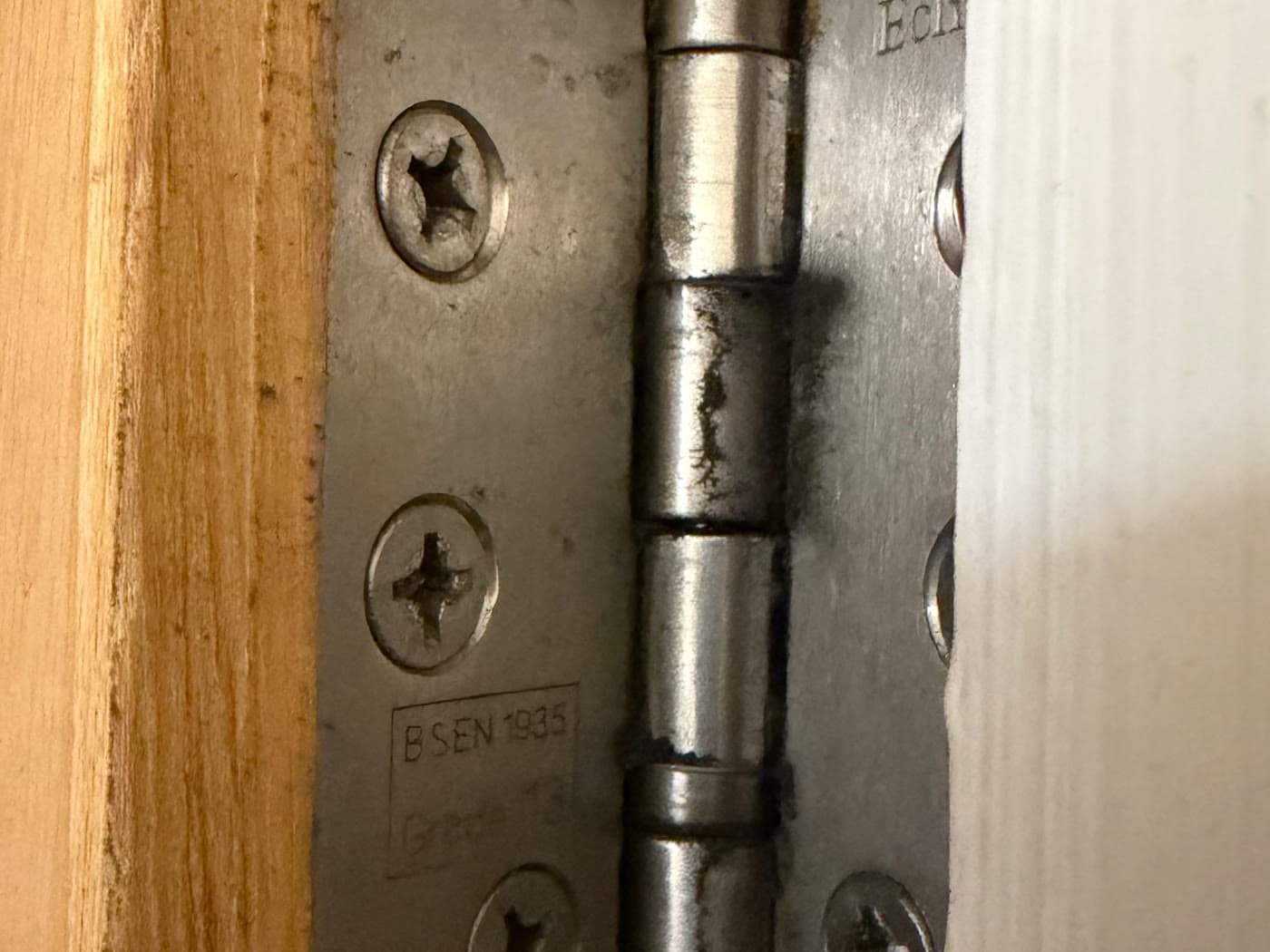
- Hung on two hinges rather than three. The hinges themselves were good-quality BS EN 1935 Grade 13 ball-bearing units — the right component, the wrong count, with no intumescent hinge protection.
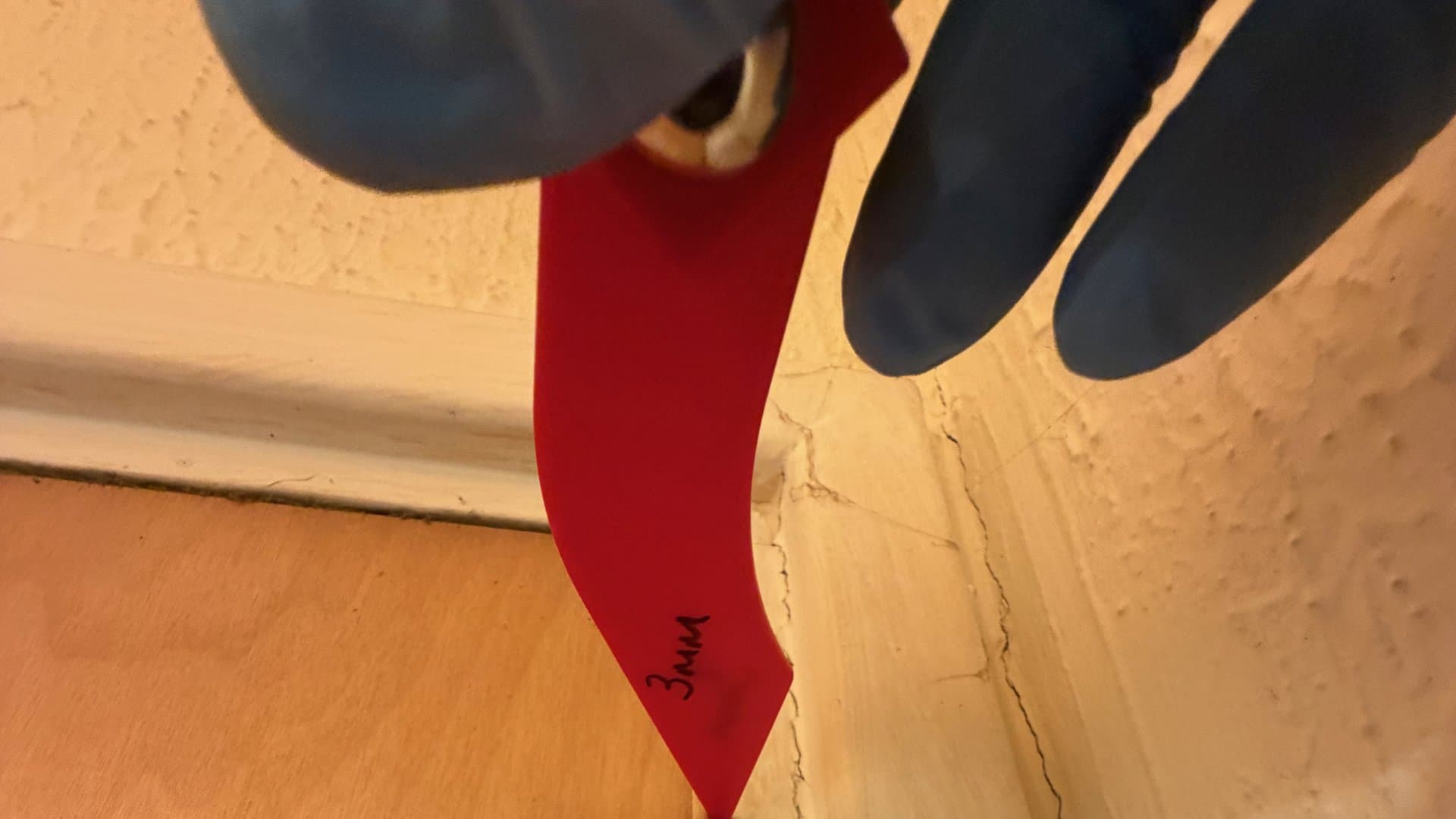
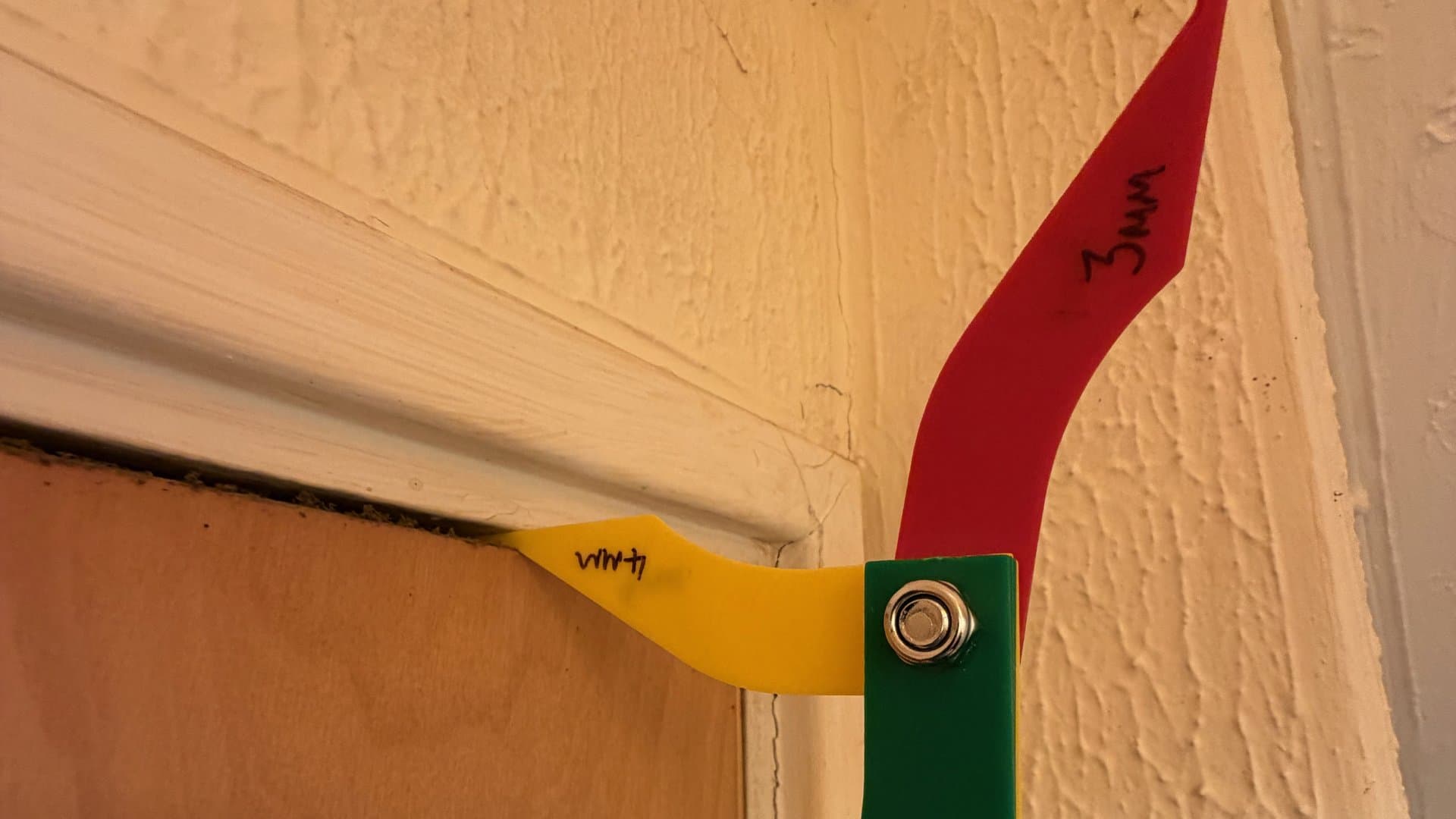
- An 8 mm unsealed threshold gap — far beyond the “as small as practicable” the Government guidance expects, and a direct smoke path onto the escape corridor.
- The leaf was split at the nightlatch fixing; the frame was worn and carried redundant fixings from previous hardware.
- A viewer and security chain had been added without certification evidence.
What we did
- Full doorset survey against 23 criteria: certification evidence, leaf and frame condition, gaps at head, jambs and threshold (measured with gap gauges), seals, hinges, closer, ironmongery and operation.
- 51 photographs taken on survey, 27 of them included in the report’s photographic library — so each finding is evidenced, not asserted.
- Because the defects spanned leaf, frame, sealing, closing and ironmongery, component-by-component repair could not restore certified performance. We recommended replacement with a complete third-party-certificated FD30S doorset, with an interim control — the door kept closed and unobstructed — until the works.
- A warning label near the doorset identified asbestos-containing material in the adjacent structure — so the recommendation included a refurbishment asbestos survey before any doorset removal, protecting whoever does the works.
The outcome
- The survey gives the client a clear, defensible position: one door, one decision, fully evidenced — instead of a list of patch repairs that would still not have made the door perform.
- An interim control documented for the period before replacement: the door kept closed and unobstructed, never wedged.
- The report feeds directly into the building’s Regulation 10 records: findings, photographic register and a prioritised action with timescale.
What the client received
- Per-criterion findings with pass/fail against each of the 23 checks
- Photographic library of 27 report images, from 51 taken on survey
- Measured gaps at head, closing edge and threshold
- Prioritised action plan with responsibility and due date
This is a real MetroFire survey. The client and property are anonymised at the client’s preference; the findings, measurements and photographs are unaltered.